
Key facts
- A network of newly discovered tunnels and underground spaces has been excavated under the Hagia Sophia in Istanbul.1
- The Hagia Sophia was built as a church over a Roman temple.1
- Nearly 3,000 tons of debris have so far been removed from the underground infrastructure.1
- No timeline for opening suitable sections of the underground to the public has been announced.1
A network of newly discovered tunnels and underground spaces, some hundreds of meters long, has been excavated under the Hagia Sophia in Istanbul, with yet more expected to be revealed.1
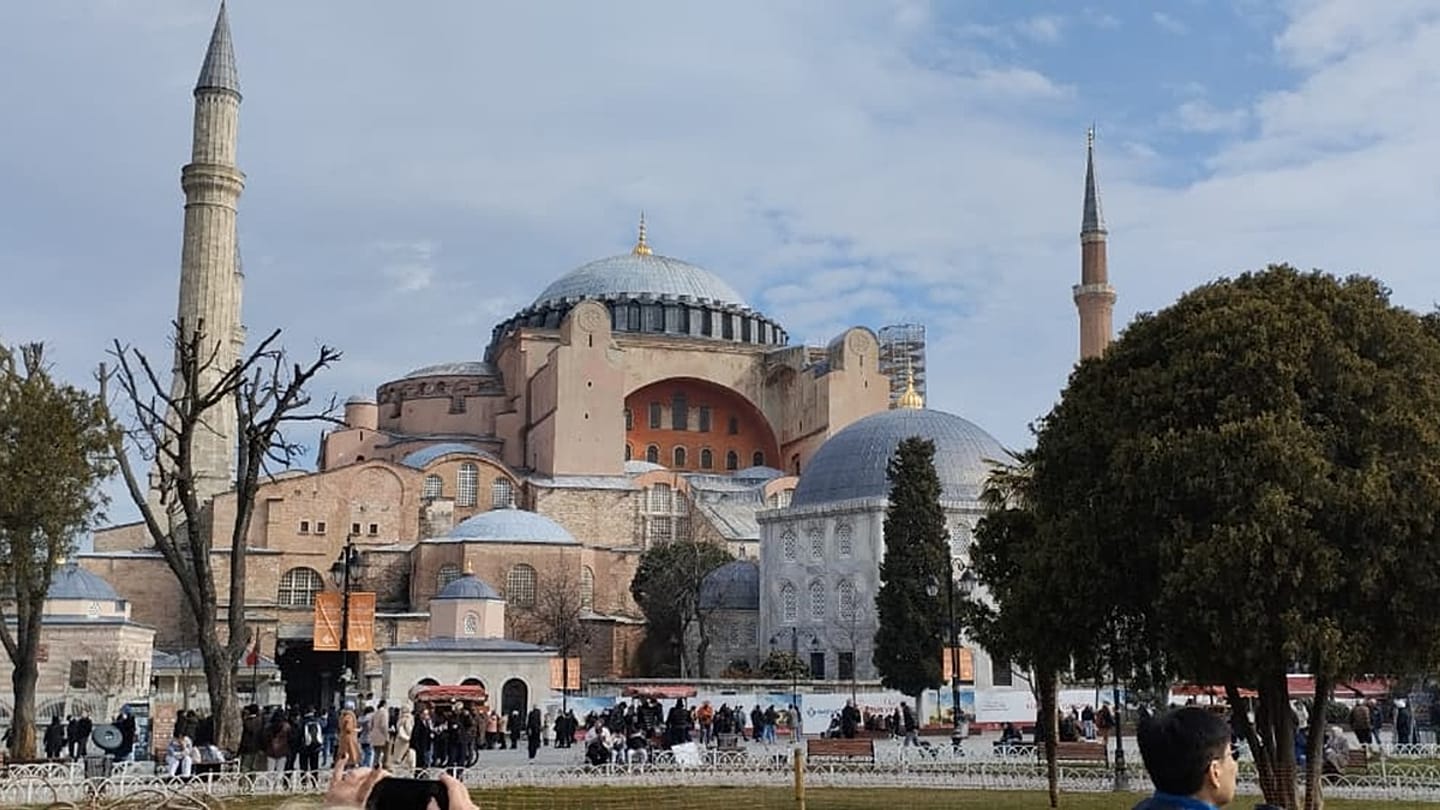
It’s a highly significant discovery at one of the world’s most popular UNESCO World Heritage sites, a magnificent sixth-century megastructure that was built as a church over a Roman temple, and was subsequently converted into a mosque and then a museum.1
Since 2020, the Hagia Sophia has been used as a mosque once more.1
A discovery that predates the Hagia Sophia itself
The fourth place of worship on the site after the temple and two previous churches was built in 537 CE..1 However, sections of the hidden world now being uncovered are believed to predate even that, Turkey’s Ministry of Culture and Tourism announced Friday.1
Last year saw the start of a three-year conservation project at the Hagia Sophia, which will restore its central dome and improve the building’s already impressive earthquake resilience, having outlasted both the Eastern Roman (or Byzantine) and Ottoman empires.1
These are the most comprehensive works at the site in nearly 1,500 years of history.1
A history of rumors and earlier finds
Rumors about hidden tunnels underneath the Hagia Sophia have persisted for centuries, and underground infrastructure, including a four-room Roman hypogeum, or burial structure, was discovered in the 1940s.1
In early 2025, subterranean structures were uncovered during cleaning work in the vaulted cellars forming the basement level of what was once the Hagia Sophia’s atrium courtyard.1
What has been found so far
The cleaning process has been documented step by step using terrestrial laser scanning and, as it progresses further, “the infrastructural system of this unique world heritage monument will be revealed in its entirety,” Hasan Fırat Diker, from the Hagia Sophia Scientific Committee, wrote in a study in March 2026.1
Nearly 3,000 tons of debris have so far been removed from the underground infrastructure and 420 meters of tunnels have already been cleared (around a quarter of a mile).1
Six chambers have been discovered, connected by nine tunnels.1
Minister of Culture and Tourism Mehmet Nuri Ersoy inspected the site and spoke to the media in an announcement on November 20.1
What comes next
Alongside the conservation and documentation work, the goal is to “make Hagia Sophia’s underground historical riches visible” by opening suitable sections to the public, Ersoy said, although no timeline for this has been announced.1
This “would be one of the most remarkable developments in Istanbul’s cultural tourism in recent years,” says historian and tour guide Hasan Barış Partal.1