
Key facts
- Australia’s climate change minister Chris Bowen has accepted responsibility for COP31’s failure to secure a new climate deal.1
- Those talks failed spectacularly to nail its prime ambition – an “Antalya pact” that was meant to drive investment.2
- As president of negotiations, Bowen barely slept for three days.2
Australia’s climate change minister Chris Bowen has accepted responsibility for COP31’s failure to secure a new climate deal after oil-producing nations blocked a proposed phase-out of fossil fuels.1
The summit collapsed without an agreement on Sunday after negotiations in Antalya, Turkey, ran two days over schedule and into record overtime.1
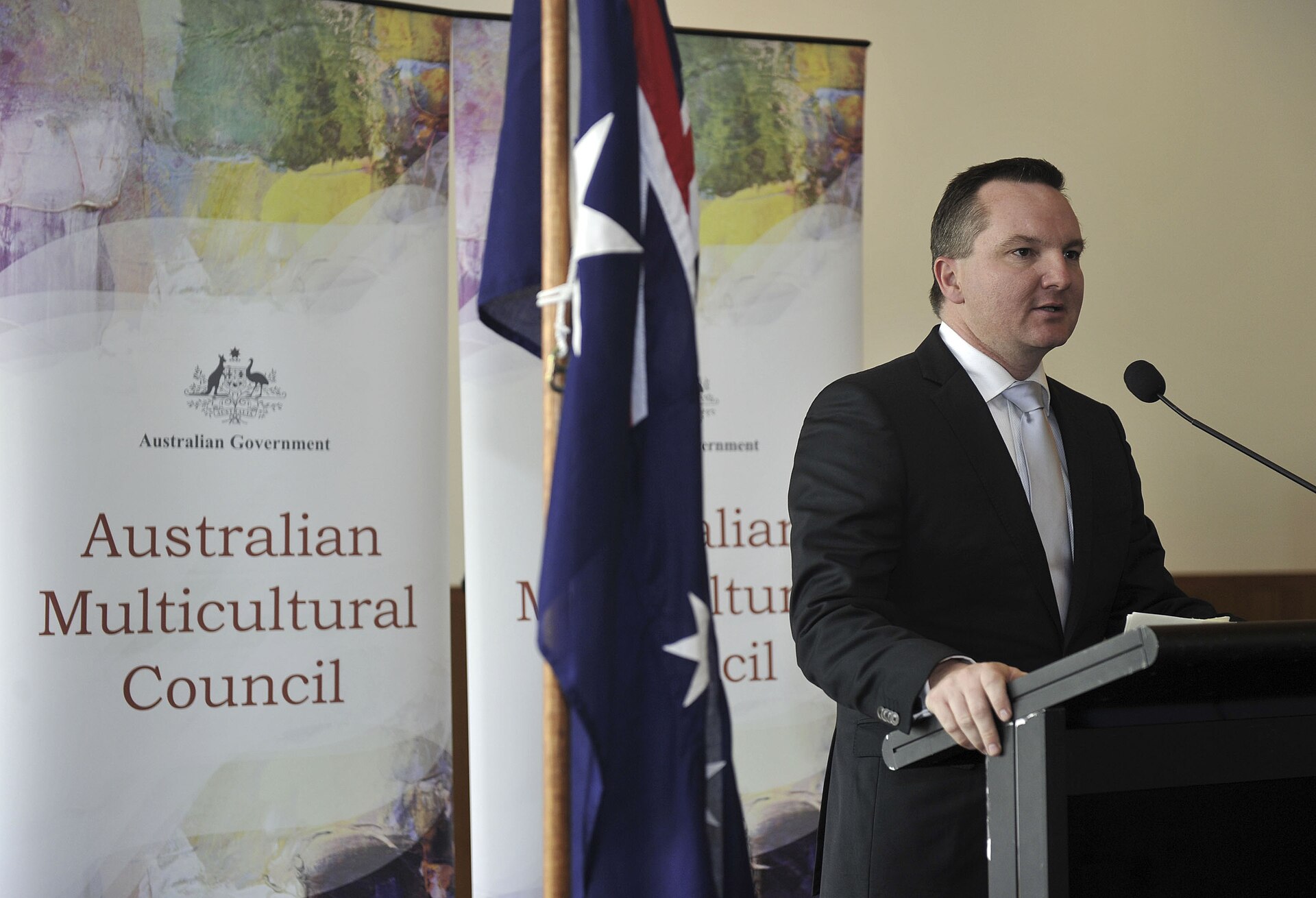
Bowen, who served as COP31 president, led the formal negotiations through Australia’s climate change minister.1
A Pact That Never Came
The talks failed spectacularly to nail its prime ambition – an “Antalya pact” that was meant to drive investment in renewable energy and electrification, boost finance to help developing countries facing worsening climate damage, and acknowledge the world is bursting through a goal of limiting the increase in global temperatures to 1.5C.2
As president of negotiations, Bowen barely slept for three days, and on the final night caught only a few moments of shut-eye on a couch in the office where a parade of negotiators had been coming to sit and talk to him.2
Many of them raised a “red line” they said was non-negotiable – that any agreement from the summit must refer to the need for the world to “transition away from fossil fuels” that had previously been agreed at talks in Dubai three years ago.2
An initial draft released on Monday mentioned “fossil fuel” or “fossil fuels” six times, but oil-producing nations refused to accept the wording.1
A compromise was proposed in the two final drafts of what was meant to be a “cover decision” – an overarching agreement that all countries would back.2
Drawn up by Bowen and his Turkish counterpart, Cop31 president Murat Kurum, it suggested countries would “recall” the decision in Dubai “in its entirety” – effectively acknowledge its existence – but not say fossil fuels directly.2
The European Union, Panama, the Marshall Islands, Vanuatu, Norway and Belize were among the countries that said no. Ireland’s climate minister, Darragh O’Brien, said the omission was “unconscionable” and the EU could not support it.2
With the scheduled Friday finish of the summit a distant memory, Bowen left the stage of the plenary hall late on Sunday afternoon when it was clear too many countries could not accept the text that he had helped put on the table.2
A Target That Stood
A promised electrification target – that 35% of final energy will come from electricity by 2035, a step that analysis has found could significantly cut fossil fuel use – had the backing of more than 90 countries and was not a deal-breaker.2
Bowen said he would have been happy with transition away from fossil fuels being in the text, but that was not going to get support.2
Bowen said the summit took place in “the most complicated and fraught geopolitical environment in living memory,” with soaring energy prices and the fallout from the Middle East conflict complicating efforts to reach agreement.1
Australian taxpayers spent $150 million supporting Bowen’s leadership of the talks, but his negotiating strategy failed to bridge deep divisions between major fossil fuel producers such as Saudi Arabia and Russia.1